Treatment for SCPCD
Early treatment of SCPCD
Clinical diagnosis of purpura fulminans skin lesions is critical because it is a life threatening condition that progresses rapidly.
-
Visually identifying skin lesions:
- Infants with SCPCD usually present within 2 to 12 hours of birth with rapidly progressive purpura fulminans and disseminated intravascular coagulation (DIC)1,2
- Early treatment of purpura fulminans is essential as it may be reversible with therapeutic intervention.
It is necessary to consult with a haematologist upon initial appearance of skin lesions due to the rapidly progressive thrombosis of purpura fulminans2,3
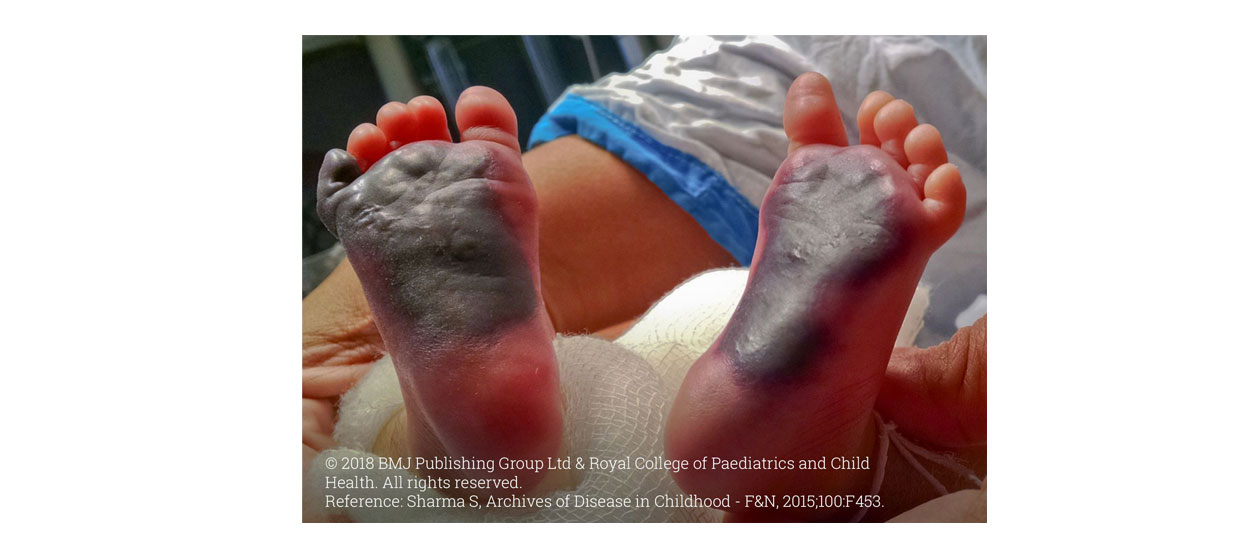
The consequences of SCPCD3
If left untreated purpura fulminans can lead to life-threatening complications:
- Purpura fulminans can rapidly progress to organ failure as a result of necrosis and disseminated intravascular coagulation3
- Rates of amputation with purpura fulminans may be as high as 62.5%4
References:
-
Goldenberg N, Manco-Johnson M. Protein C deficiency. Haemophilia. 2008;14(6):1214–1221.
-
Price VE, et al. Diagnosis and management of neonatal purpura fulminans. Semin Fetal Neonatal Med. 2011;16(6):318-22.
-
Chalmers E, et al. Purpura fulminans: recognition, diagnosis and management. Archives of Disease in Childhood. 2011;96(11):1066-1071.
-
Gürgey A, et al. Outcome in Children With Purpura Fulminans: Report on 16 Patients. Am J Hematol. 2005;80(1):20-5.