
Acute treatment of SCPCD
with CEPROTIN®
STUDY DESIGN:
This was a phase 2/3, prospective, open-label, multicenter, study to demonstrate the safety and efficacy of protein C concentrate for the treatment of acute thrombotic episodes (e.g. purpura fulminans (PF) and coumarin-induced skin necrosis).
- Part l: treatment of acute thrombotic events
- Part 2: short-term prophylaxis
SCPCD patients with a documented functional PC level <20 % of norrnal and confirmatory mutation sequence analysis or a documented family history of PC deficiency; patients beyond six months of age had confirmed plasma PC activity while in an asymptomatic state, and not receiving oral anticoagulation therapy were eligible to enter the study. A total of 18 patients with Severe Congenital Protein C Deficiency (SCPCD) were enrolled in the full prospective trial, 15 of which received protein C concentrate.
In Part 1, 11 patients received protein C concentrate for 24 acute thrombotic episode, 18 of which were purpura fulminans.
Primary Endpoint:
The efficacy of CEPROTIN® for treating cases of purpura fulminans and coumarin-induced skin necrosis was rated on a pre-defined objective rating scale.
Secondary Endpoint:
The efficacy of CEPROTIN® treatment was also rated in terms of distribution of responses for episodes of purpura fulminans or coumarin-induced skin necrosis and thromboembolic events (based on a pre-defined four point scale excellent, good, fair, and not effective or not rated). PC activity levels, activated PC (APC), D-dimers, and thrombin-antithrombin complexes (TAT) were also monitored.
Predefined efficacy criteria for treatment of acute TEs were compared with a historical control arrn (i.e. patients receiving conventional therapy without protein C replacement).
Historical controls were used in view of the difficulty of performing a large-scale controlled clinical trial in patients with SCPCD.
STUDY LIMITATIONS:
- The sample size is small due to the rarity of the disease; however, the majority of patients in the United States who were diagnosed with SCPCD participated in this study.
- Owing to the small sample size, it is unknown how many SCPCD patients would be outside of the reported range for biochemical and clinical response to therapy.
- Dosing was based on studies of newborn infants with severe purpura fulminans and when applied to older children and adults, resulted in excessive levels that are not recommended by the authors.
- Historic and prospective data sets are both too small to determine confidence intervals for therapeutic response of thrombotic events in patients with SCPCD.
PRIMARY OUTCOME: 94.7% OF CEPROTIN® TREATMENTS WERE RATED AS EFFECTIVE IN TREATING PUPURA FULMINANS (PF) AND ACUTE VENOUS THROMBOSIS1
CEPROTIN® was administered to 11 SCPCD patients for the acute management of 24 thrombotic events (18 for PF, 1 coumarin-induced skin necrosis and 5 for venous thromboembolisms).
Primary endpoint efficacy rating of CEPROTIN® for the treatment of PF vs. historical control group (N=34)1
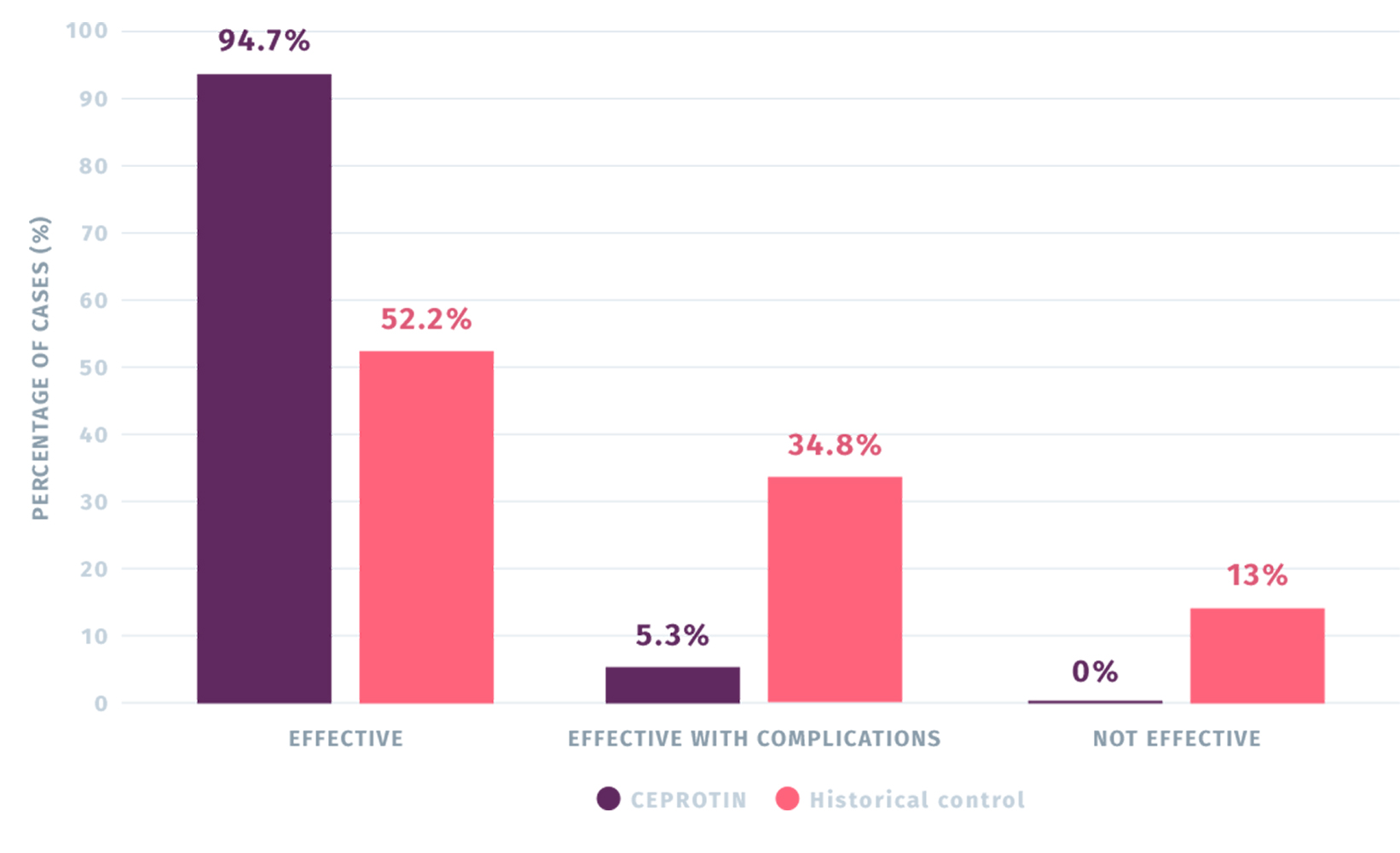
- Comparison of treatment efficacy revealed that CEPROTIN® was perceived as more effective than the historical treatments used to treat 23 patients1
- CEPROTIN® was found to be effective at treating PF and acute thrombotic events without increasing the number of complications1
Effective:
stabilisation and regression of skin lesions and stabilisation of thrombi
Effective with complications: effective treatment caused an adverse drug reaction interfering with treatment regimen or forcing discontinuation or introducing pathogenic viral infection
Not effective: all other
SECONDARY OUTCOME: 68.4% AND 80% OF CEPROTIN® TREATMENTS FOR PF AND VENOUS THROMBOSIS WERE RATED EXCELLENT1
The secondary efficacy of CEPROTIN® for the treatment of PF and venous thrombosis in patients with congenital PC deficiency was judged by study investigators.
Secondary efficacy rating of CEPROTIN® for the treatment of PF and other thrombotic events (N=11)1
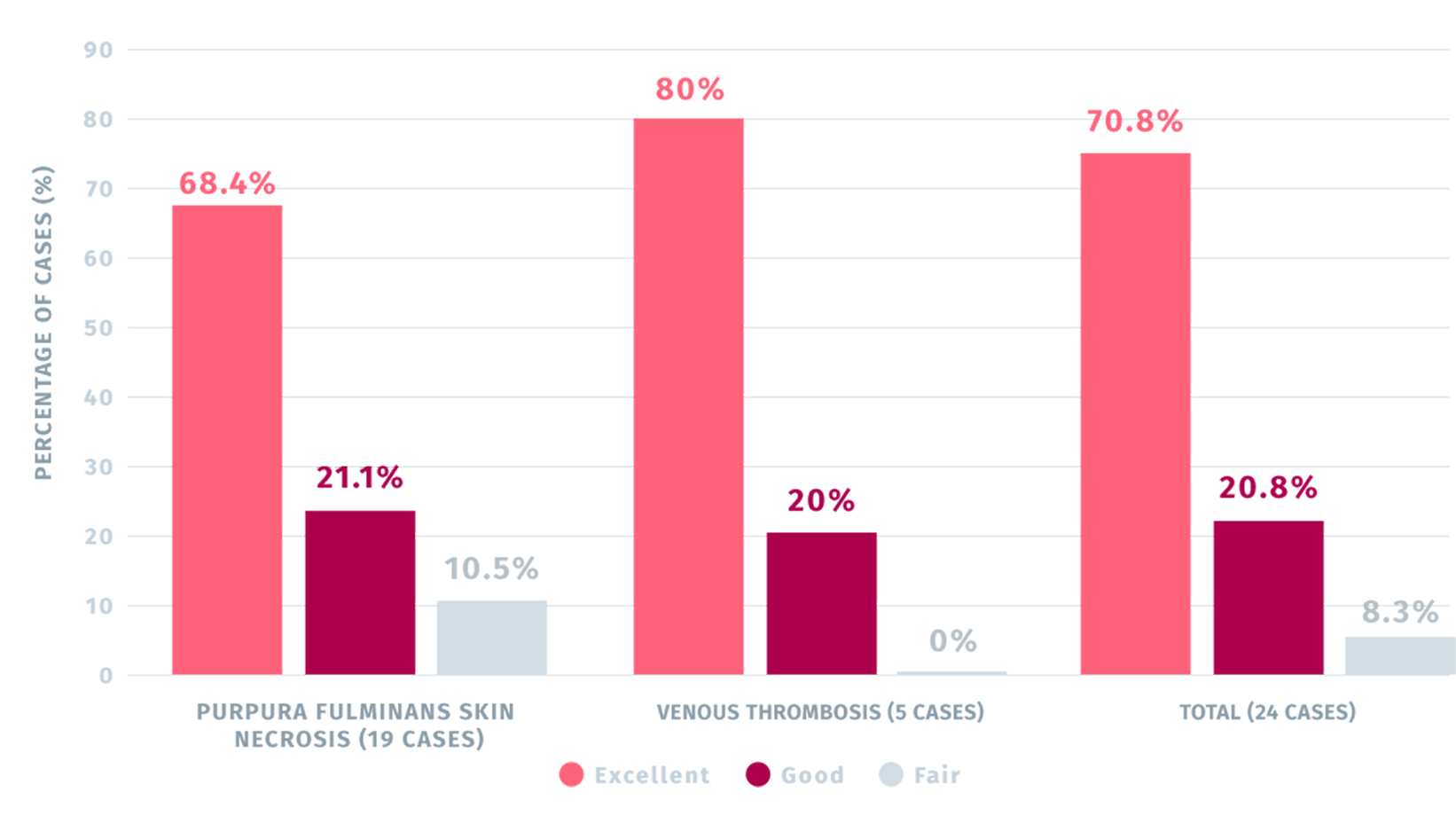
- 68.4% of the cases of skin lesions due to purpura fulminans treated with CEPROTIN® were rated as excellent1
- 80% of cases of venous thrombosis events treated with CEPROTIN® were rated as excellent1
Excellent: no new lesions after 48 hours of treatment and complete resolution of non-necrotic lesions by day 5, or reduction in the extent of a thrombus to below baseline level within 2–3 days of treatment.
Good: no new lesions after 48 hours of treatment and complete resolution of non-necrotic lesions by day 6-14, or reduction in the extent of a thrombus to below baseline level within 4–5 days of treatment.
Fair: no new lesions after 48 hours of treatment and complete resolution of non-necrotic lesions by more than 14 days, or no reduction in the extent of a thrombus to below baseline level after 4–5 days of treatment.
SECONDARY OUTCOME: CEPROTIN® NORMALISED PROTEIN C LEVELS1
Administration of CEPROTIN® leads lo rapidly normalised plasma protein C activity levels, which was demonstrated in the phase II/III trial.
Efficacity of CEPROTIN® infusion on peak protein C activity levels (N=11)
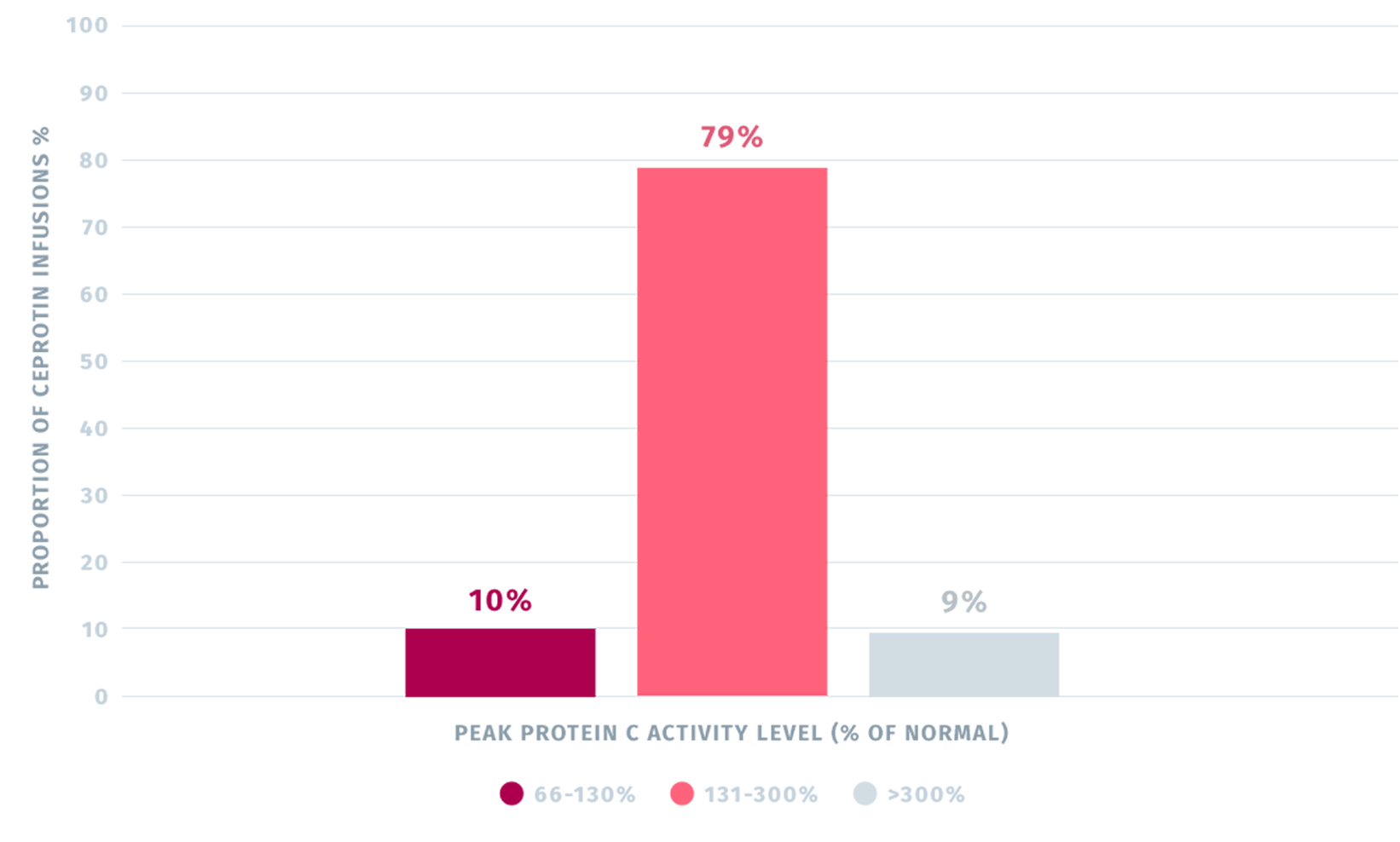
- After receiving the first infusion of 120 IU/kg of CEPROTIN®, the median protein C activity increased to 165 IU/dL1
- With subsequent infusions protein C activity levels in most patients peaked at 66-300% of normal1
SAFETY RESULTS :
- 11 patients were treated with CEPROTIN® for acute thrombotic events of which:1
- 7 experienced serious adverse events (pyrexia, haemorrhage or events relating to underlying protein C deficiency)
all experienced non-serious adverse events
All adverse events experienced were considered unrelated to CEPROTIN® treatment1
References:
-
Manco-Johnson MJ, et al. Efficacy and safety of protein C concentrate to treat purpura fulminans and thromboembolic events in severe congenital protein C deficiency. Thromb Haemost. 2016;116:56-68.