
How to dose CEPROTIN®
Consult the CEPROTIN® Prescribing information before administering to any patient.
Treatment with CEPROTIN® should be initiated under the supervision of a physician experienced in substitution therapy with coagulation factors/inhibitors where monitoring of protein C activity is feasible.1
The dose should be adjusted on the basis of laboratory assessment for each individual case. A protein C activity of 100% should be achieved initially and the activity should be maintained above 25% for the duration of the treatment. The measurement of protein C activity using chromogenic substrates is recommended for the determination of the patient’s plasma level for protein C before and during treatment with CEPROTIN®.1
Patients treated during the acute phase of their disease may display much lower increases in protein C activity. The wide variation in individual responses implies that the effects of CEPROTIN® on coagulation parameters should be checked regularly.1
Initial CEPROTIN® dose calculation is based on patient weight and protein C activity levels1
This graph is an example based on possible new patients born weighing 3Kg.
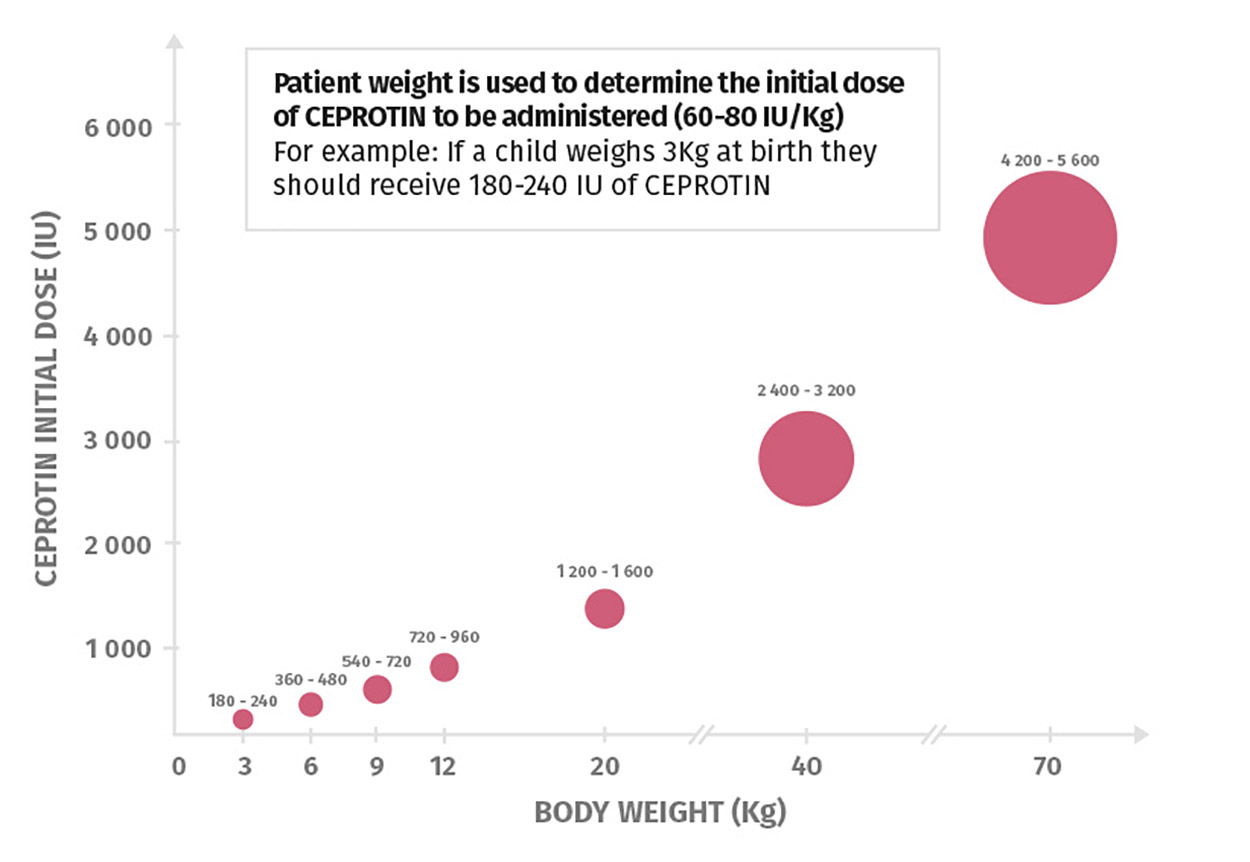
- An initial dose of 60 to 80 IU/kg for determination of recovery and half-life is advised. (In rare and exceptional cases, subcutaneous infusion of 250-350 IU/kg was able to produce therapeutic protein C plasma levels in patients with no intravenous access).1
- CEPROTIN® should be administered at a maximum injection rate of 2 ml per minute except for children with a body weight of <10 kg, where the injection rate should not exceed a rate of 0.2 ml/kg/min.1
- It should be kept in mind that the half-life of protein C may be severely shortened in certain clinical conditions such as acute thrombosis with purpura fulminans and skin necrosis.1
- If the patient is switched to permanent prophylaxis with oral anticoagulants, protein C replacement is to be discontinued only when stable anticoagulation is obtained.1
- In patients receiving prophylactic administration of protein C, higher trough levels may be warranted in situations of an increased risk of thrombosis (such as infection, trauma, or surgical intervention).1
References:
-
CEPROTIN. Summary of Product Characteristics (SmPC). EMA approved – last updated 09/2017.